menu

Business Interruption Mitigation in San Diego – Industrial-Grade Water Extraction That Restores Operations in Hours, Not Days

When water damage strikes your San Diego commercial facility, every hour of downtime costs revenue. Our rapid-deployment business continuity restoration protocols minimize operational disruption through phased extraction, controlled drying zones, and 24/7 project management that keeps your business functional during recovery.

Slider Image 1
Slider Image 2
Slider Image 3
Slider Image 4
Slider Image 5
Slider Image 7
Slider Image 8
Slider Image 9
Slider Image 10
Slider Image 11

Why Water Damage Threatens San Diego Commercial Operations

San Diego's coastal microclimate creates conditions that accelerate water damage in commercial facilities. When a plumbing failure, roof leak, or equipment malfunction floods your warehouse, office, or retail space, you face more than just standing water. The Pacific marine layer drives humidity levels that promote mold colonization within 48 hours. Salt-laden air corrodes electrical systems faster than inland locations. Your business cannot afford to shut down for a week while generic restoration contractors follow residential timelines.

The commercial real estate market in neighborhoods like Sorrento Valley, Kearny Mesa, and Mission Valley operates on tight margins. A flooded server room halts operations for tech companies. Water intrusion in a Pacific Beach restaurant means lost revenue during peak tourist season. A manufacturing facility in Otay Mesa faces contract penalties when production lines go offline. These scenarios demand business interruption mitigation strategies that prioritize speed and surgical precision.

Standard residential water removal approaches fail in commercial settings. You need industrial-capacity extraction equipment, load-calculation drying systems, and project managers who understand how to sequence work around your operational needs. The goal is not just drying the structure. The goal is minimizing business downtime through phased restoration that allows partial occupancy and continuous cash flow. San Diego's competitive business environment rewards companies that respond to crises with strategic damage control rather than panic-driven facility closures.

Why Water Damage Threatens San Diego Commercial Operations
Our Commercial Water Damage Protocol

Our Commercial Water Damage Protocol

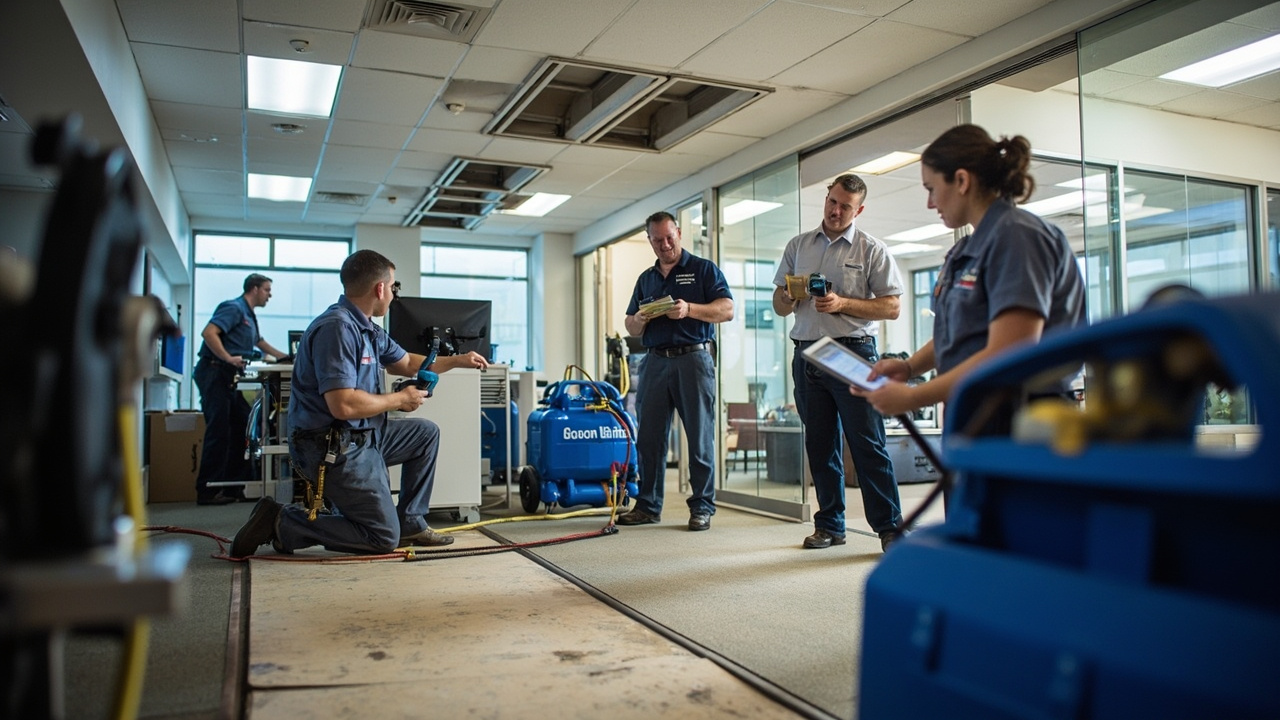
We deploy business continuity restoration methodology designed for commercial environments. Our process begins with operational triage, not just damage assessment. We identify which zones can remain functional during restoration, which areas require temporary barriers, and how to sequence extraction and drying to preserve revenue-generating activities. This approach separates professional commercial restoration from residential-focused contractors who lack the capacity to manage complex multi-zone projects.

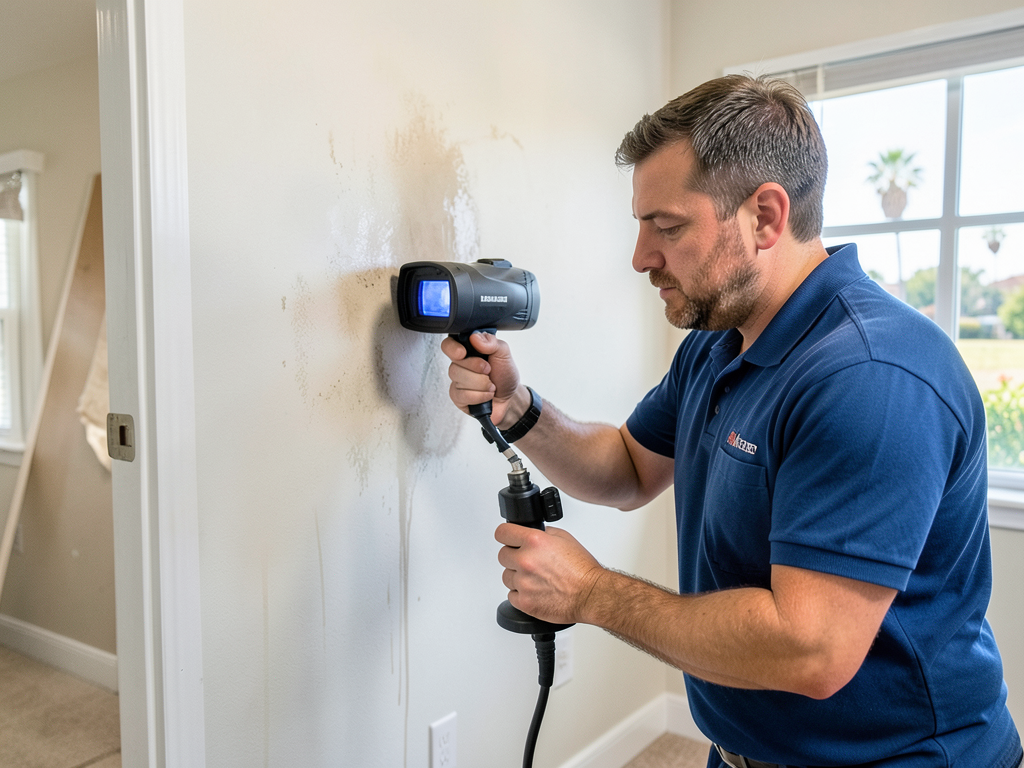
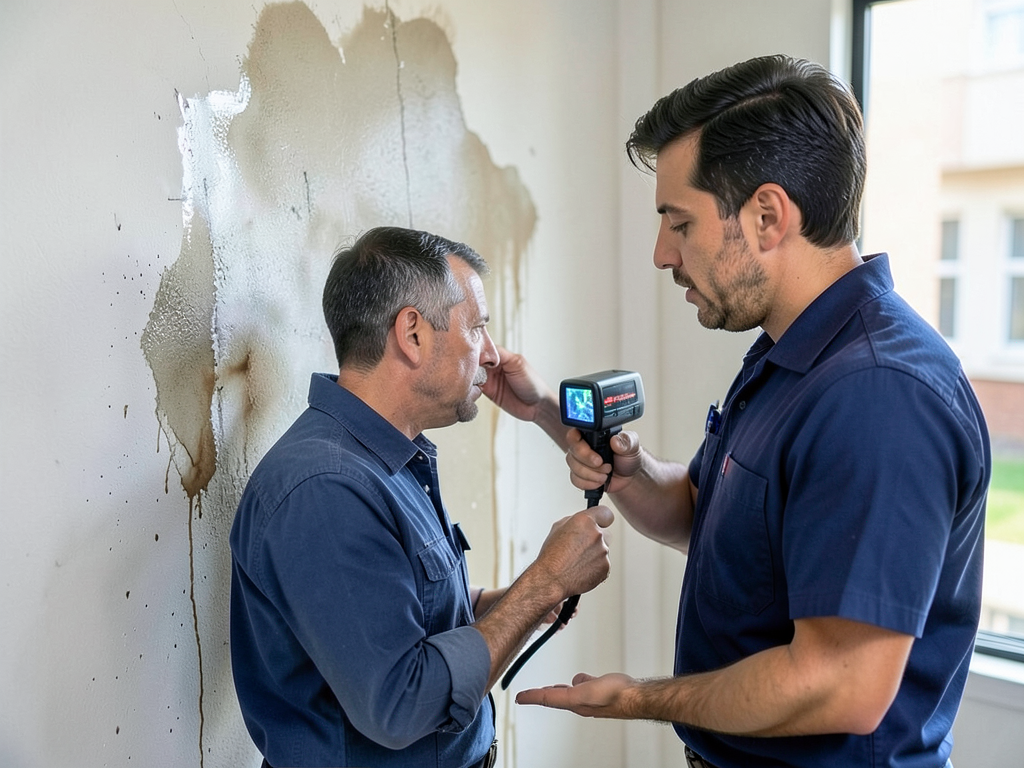
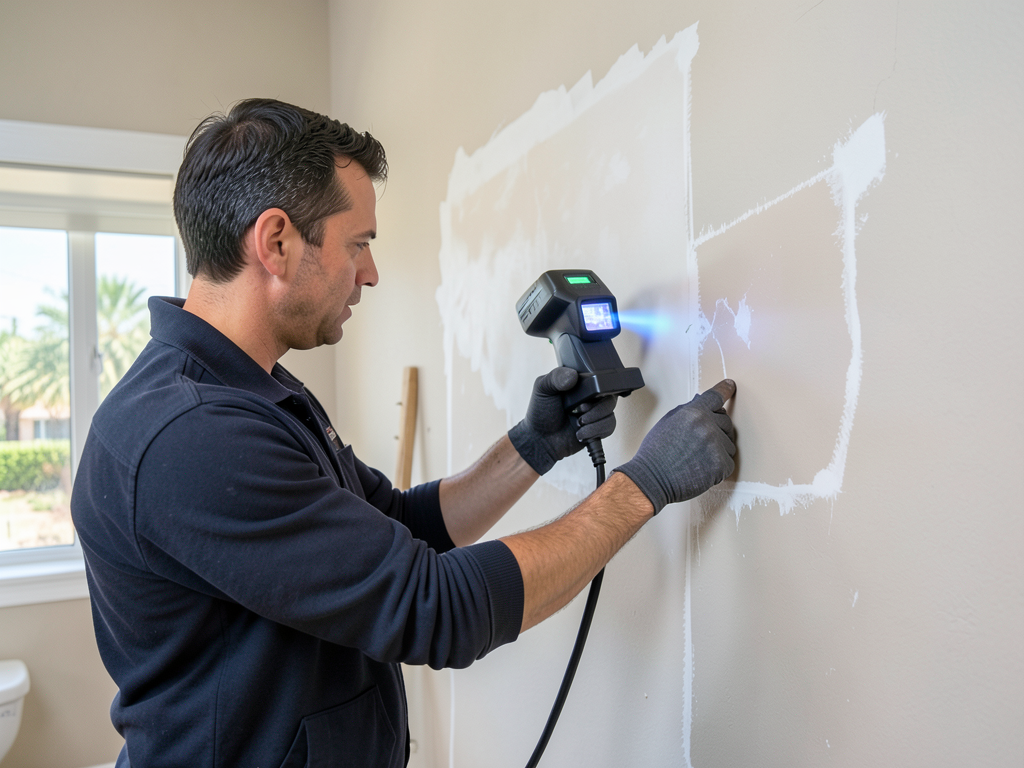
Our truck-mounted extraction units remove thousands of gallons per hour, drastically reducing the standing water phase that extends downtime. We use moisture mapping technology to identify hidden saturation in wall cavities, under flooring systems, and within insulation barriers. This prevents the secondary damage cycle where undetected moisture causes mold growth, requires a second shutdown, and doubles your total recovery time.

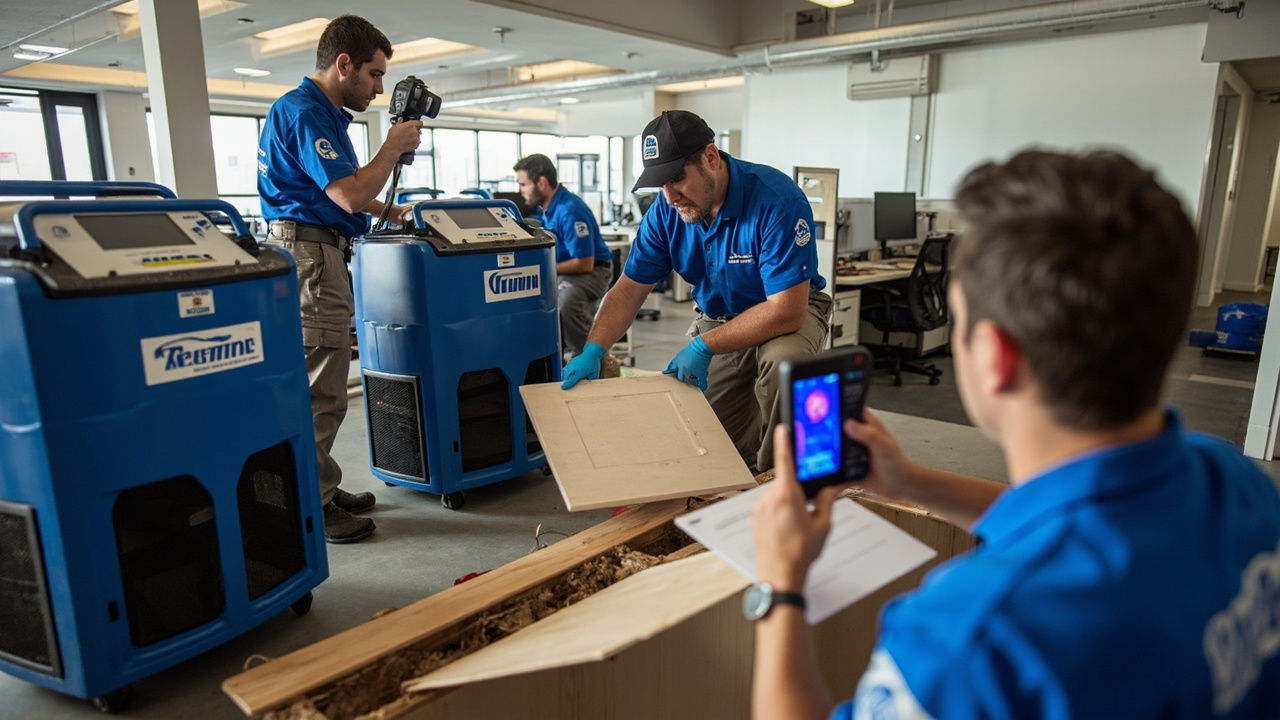
Controlled drying zones allow us to isolate affected areas with negative air pressure barriers. Your unaffected spaces remain operational while we address the damage. We calculate the exact number of air movers and dehumidifiers based on room volume, saturation levels, and target drying times. This is load-calculated drying, not guesswork. We monitor moisture levels every four hours and adjust equipment placement to hit aggressive drying benchmarks.

For facilities with sensitive equipment or inventory, we coordinate with your insurance adjuster and document every phase with thermal imaging and moisture readings. This creates the paper trail you need for claims processing while our crews focus on reducing operational downtime. You get a single point of contact who manages the entire workflow, communicates with your team, and keeps the project moving 24/7 until you are back to full capacity.

How We Execute Commercial Water Restoration

Business Interruption Mitigation in San Diego – Industrial-Grade Water Extraction That Restores Operations in Hours, Not Days
01

Emergency Response Assessment

Within 90 minutes of your call, our project manager arrives on-site to conduct operational triage. We identify the water source, determine the affected square footage, and categorize contamination level. Most importantly, we map which zones can remain operational during restoration. You receive an immediate verbal action plan that outlines phased work areas, equipment deployment, and estimated timeline for partial and full occupancy restoration.
02

Extraction and Containment

Our crews establish containment barriers using plastic sheeting and negative air machines to isolate damaged zones. Truck-mounted extractors remove standing water, followed by submersible pumps for deep pooling in elevator shafts or below-grade spaces. We pull baseboards to access wall cavities, lift carpet without removal when possible, and use injectidry systems for hardwood floors. The goal is maximum water removal in the first four hours to prevent wicking and secondary saturation.
03

Monitored Structural Drying

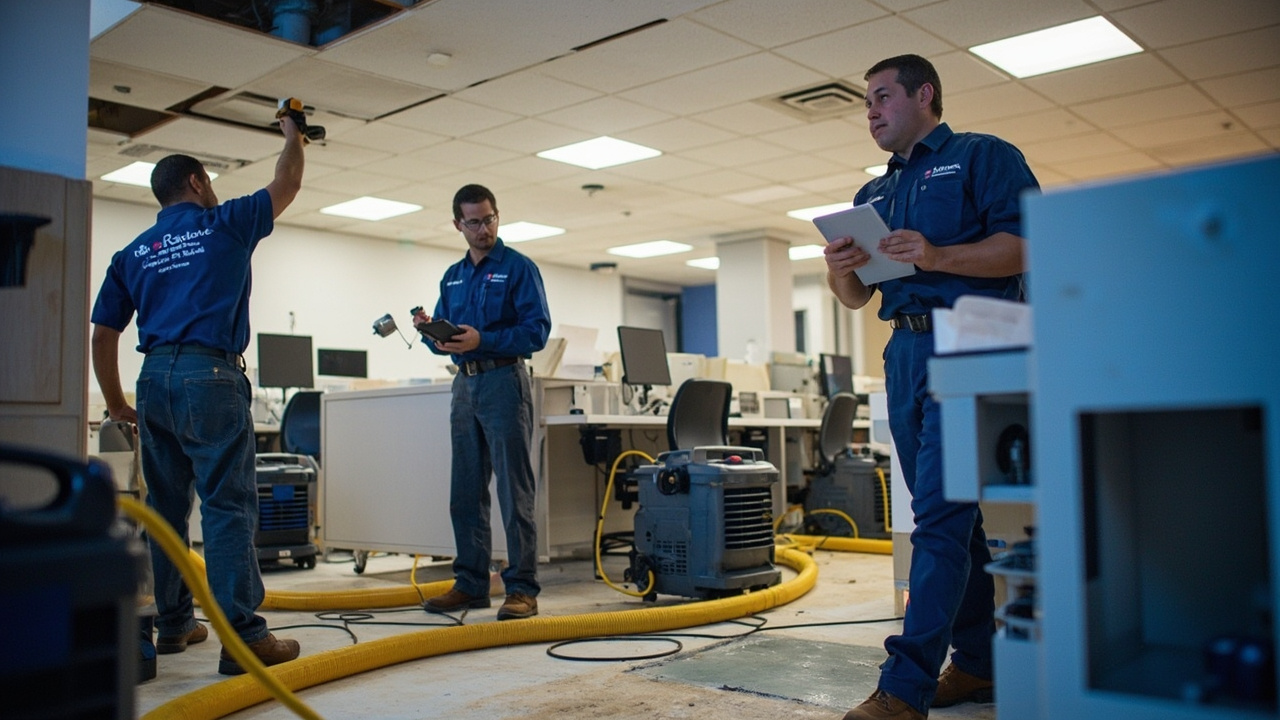
We deploy commercial-grade air movers and refrigerant dehumidifiers based on psychrometric calculations for your space. Moisture meters track drying progress in structural materials every four hours. When readings hit industry-standard dry goals, we remove equipment and conduct final thermal imaging to confirm no hidden moisture pockets remain. You receive a completion report with before and after documentation for your records and insurance claim. Your facility is cleared for full operations.

Why San Diego Businesses Trust Our Commercial Restoration Expertise

Commercial water damage restoration in San Diego requires more than industrial equipment. You need a team that understands how coastal humidity affects drying times, how the city's diverse building stock from 1970s tilt-up warehouses to modern glass office towers requires different approaches, and how to navigate the permitting requirements when restoration involves structural repairs in zones governed by the California Building Code.

We have restored operations for businesses across San Diego's key commercial corridors. Tech companies in Sorrento Valley need server rooms dried without downtime. Restaurants in the Gaslamp Quarter cannot afford to close during convention season. Manufacturing facilities in Otay Mesa face contract penalties if production lines stay offline. We have managed all of these scenarios by treating business continuity restoration as the primary objective, not an afterthought.

Our project managers coordinate with your insurance adjuster from day one. We provide detailed documentation that supports your claim while preventing the delays that occur when adjusters receive incomplete information. This dual-track approach means you focus on business operations while we handle both the physical restoration and the administrative requirements of the insurance process.

San Diego's competitive market punishes businesses that lose momentum during crisis events. Customers find alternatives. Contracts get reassigned. Revenue opportunities disappear. We have watched companies choose the wrong restoration partner and suffer weeks of unnecessary downtime because the contractor treated their commercial facility like a large house. You deserve a partner who understands that mitigating commercial downtime is not just about drying a building. It is about protecting your market position and preserving the business you have built.

What to Expect During Commercial Water Restoration

Response and Mobilization Speed

We maintain a dedicated commercial response team available 24/7/365. Your initial call triggers immediate dispatch. Our project manager arrives within 90 minutes anywhere in San Diego County. Equipment trucks follow within two hours. For large-loss events exceeding 10,000 square feet of damage, we mobilize additional crews and equipment from our network to compress the timeline. You are not waiting until Monday morning because your emergency happened on a weekend. We begin extraction the moment we arrive because every hour of delay extends your total downtime and increases secondary damage risk.

Operational Triage and Planning

Our assessment focuses on business continuity first. We identify which departments can remain operational, which spaces require temporary relocation, and how to phase the work to minimize disruption. You receive a written restoration plan within four hours that outlines the work sequence, equipment placement, estimated drying time for each zone, and a target date for full occupancy. This plan gets updated daily as conditions change. Your assigned project manager maintains direct communication with your leadership team, providing morning and evening status updates so you can make informed decisions about staffing, customer communication, and operational adjustments.

Structural Drying and Documentation

We use load-calculated drying protocols based on the specific materials in your facility. Concrete slab foundations dry slower than raised wood floors. Insulated wall cavities require different equipment than open framing. We monitor moisture levels with calibrated meters and adjust air mover placement to optimize airflow patterns. Thermal imaging cameras identify hidden saturation that moisture meters miss. You receive daily moisture logs and photographic documentation. When structural materials reach industry-standard dry goals, we conduct final verification and provide a completion certificate. This documentation supports your insurance claim and protects you from future liability if undiscovered moisture causes mold growth.

Post-Restoration Verification and Support

After equipment removal, we conduct a final walkthrough to confirm the space is ready for normal operations. You receive a comprehensive report that includes all moisture readings, thermal images, and equipment logs. We remain available for 30 days post-restoration to address any questions or concerns. If you discover additional moisture issues during this period, we return immediately to investigate and resolve them at no additional charge. For facilities with ongoing moisture concerns due to building design or plumbing issues, we provide recommendations for permanent solutions that prevent future water intrusion events. Our goal is not just fixing the current problem but helping you understand how to protect your facility long-term.

Frequently Asked Questions

You Have Questions,
We Have Answers

What does business interruption coverage cover? +

Business interruption coverage compensates for lost income when a covered peril forces temporary closure. It typically covers net profit loss, continuing fixed costs like rent and payroll, and relocation expenses during repairs. The coverage applies after property damage from fire, water, wind, or other insured events. In San Diego, businesses facing water damage from pipe bursts or coastal storm impacts can claim lost revenue during restoration. The policy requires documentation of pre-loss earnings and actual downtime. Coverage duration varies by policy but usually extends until operations return to pre-loss levels or the policy limit exhausts.

What is mitigation in business? +

Mitigation in business refers to actions that reduce risk exposure and minimize potential losses before, during, or after a disruptive event. It includes preventive measures like installing backflow valves, emergency planning, staff training, and vendor diversification. During an incident, mitigation involves rapid response to limit damage spread and operational downtime. For San Diego businesses, this means protecting against water intrusion from aging infrastructure or coastal weather. Effective mitigation reduces insurance claims, maintains customer confidence, and accelerates recovery. The goal is protecting revenue continuity and minimizing the financial impact of unexpected interruptions.

What actions can be taken to reduce or mitigate business risks? +

Businesses can reduce risk through physical upgrades like water detection systems, fire suppression equipment, and regular maintenance schedules. Develop detailed emergency response plans with clear staff roles. Maintain relationships with restoration contractors who can mobilize within hours. Document operations and inventory thoroughly for insurance claims. Cross-train employees to maintain essential functions during disruptions. For San Diego facilities, address plumbing vulnerabilities common in older downtown structures and implement protocols for rapid water shutoff. Regular insurance policy reviews ensure adequate coverage limits. Diversify supply chains and establish backup work locations to maintain operations during extended closures.

What does business interuption insurance cover? +

Business interruption insurance covers lost net income, fixed operating expenses that continue during closure, and temporary relocation costs after a covered property loss. It compensates for revenue you would have earned if operations continued normally. The policy pays ongoing expenses like rent, utilities, lease obligations, and key employee salaries during restoration. For San Diego businesses impacted by water damage or fire, coverage begins after a waiting period and continues until you reopen or reach policy limits. The insurer requires proof of historical earnings, typically through tax returns and financial statements, to calculate payable losses.

What is not covered under business interruption? +

Business interruption policies exclude losses from uncovered perils like floods, earthquakes, pandemics, or utility failures originating off-premises. Ordinary wear and tear, deferred maintenance, and pre-existing conditions are not covered. Lost income from longer closures than necessary to repair damage gets excluded. The policy will not pay for business decline unrelated to the physical loss or for opportunities missed during downtime. San Diego businesses need separate earthquake and flood coverage given regional risks. Waiting periods eliminate coverage for brief interruptions. Undocumented income, inventory spoilage without proper refrigeration backup, and fines or penalties are typically excluded.

What is the 80% rule in insurance? +

The 80% rule requires businesses to carry coverage equal to at least 80% of the property's replacement value to avoid coinsurance penalties. If you insure for less, the insurer pays only a proportional amount of losses, leaving you to cover the gap. For example, insuring a $1 million building for only $600,000 means you carry 75% of the required 80%, so the insurer pays just 75% of covered claims. This rule protects insurers from underinsured properties and incentivizes accurate valuations. San Diego commercial properties require regular appraisals given fluctuating real estate values.

What are 5 examples of mitigation? +

Five mitigation examples include installing automatic water shutoff systems that detect leaks in unoccupied spaces, implementing redundant data backup systems stored off-site, establishing vendor agreements for emergency equipment rental, training staff in emergency shutdown procedures for critical systems, and maintaining current building inspections to identify vulnerabilities. San Diego businesses benefit from seismic retrofitting for older structures, backflow prevention devices in flood-prone areas, and emergency power systems to maintain refrigeration or security. Regular drills ensure employees execute mitigation plans effectively. Documentation protocols enable faster insurance claims processing and reduce disputes over pre-loss conditions.

What are the three types of mitigation? +

The three primary mitigation types are structural, non-structural, and procedural. Structural mitigation involves physical building modifications like reinforced foundations, upgraded roofing systems, or waterproofing measures. Non-structural mitigation includes equipment anchoring, utility shutoffs, and protection of contents without altering the building. Procedural mitigation covers planning, training, insurance reviews, and documentation protocols. San Diego commercial properties combine all three by retrofitting older structures, securing mechanical systems against seismic movement, and maintaining updated emergency contact lists. Each type addresses different vulnerability layers. Effective mitigation strategies integrate all three approaches to minimize business interruption duration and financial impact.

What are the 4 mitigation strategies? +

The four core mitigation strategies are avoidance, reduction, transfer, and acceptance. Avoidance eliminates risk by changing operations or location. Reduction implements controls to lower probability or severity, like sprinkler systems or redundant equipment. Transfer shifts risk through insurance or contractual agreements with vendors. Acceptance acknowledges unavoidable low-probability risks after implementing cost-effective measures. San Diego businesses balance these strategies based on coastal proximity, building age, and operational complexity. High-value operations emphasize reduction and transfer. Smaller firms might accept minor risks while transferring catastrophic exposure through adequate insurance coverage. The strategy mix evolves with business growth and changing risk profiles.

What are the 5 mitigation strategies? +

Five mitigation strategies expand the core four by adding preparedness as a distinct category. Preparedness involves emergency planning, staff training, supply stockpiling, and establishing vendor relationships before incidents occur. This differs from reduction by focusing on response readiness rather than prevention. For San Diego businesses, preparedness means having restoration contractors identified, temporary workspace options secured, and communication plans tested. The five strategies work together: avoid unnecessary risks, reduce remaining exposures through controls, transfer catastrophic risks via insurance, prepare response capabilities, and accept residual risks within tolerance levels. Regular reviews ensure strategies remain aligned with operational changes and emerging threats.

How San Diego's Coastal Climate Accelerates Commercial Water Damage Timelines

San Diego's marine layer and coastal humidity create conditions that compress the window for effective water damage response. When water intrudes into your commercial facility, the ambient humidity prevents natural evaporation. This means structural materials stay wet longer, mold spores germinate faster, and the risk of secondary damage increases every hour. Facilities located within five miles of the coast face even greater challenges because salt-laden air accelerates corrosion of HVAC systems, electrical panels, and metal framing. The same mild climate that attracts businesses to San Diego becomes a liability during water damage events. You cannot rely on air circulation alone to dry a space. You need industrial dehumidification that removes moisture from the air faster than the marine layer can replenish it.

San Diego's building codes and inspection requirements add complexity to commercial water restoration projects. Facilities built before 1975 may contain asbestos in ceiling tiles or flooring adhesives. Any demolition work triggers California Title 8 regulations requiring certified abatement contractors. Buildings in the Coastal Zone require additional permits for structural repairs. We understand these local regulatory requirements and factor them into project timelines. Our crews hold the certifications necessary to work in regulated environments. We coordinate with city inspectors, provide required documentation, and ensure your facility meets all code requirements before you reoccupy the space. This local expertise prevents the delays and compliance issues that occur when out-of-area contractors misunderstand San Diego's specific regulatory environment.
Water Damage Restoration Services in The San Diego Area

We are proud to serve the entire San Diego area and invite you to view our service region on the map below. While our emergency response team is mobile and always ready to dispatch to your location rapidly, our central operations base allows us to coordinate efficient service across all of San Diego County. Contact us today for immediate assistance, no matter where your property is located within our service area.

Address:
Keystone Water Damage Restoration San Diego, 4445 Eastgate Dr, San Diego, CA, 92121

Additional Services We Offer

Our news updates

Latest Articles & News from The Blogs

How Clogged Gutters Can Lead to a Flooded Perimeter in Talmadge When leaves and debris clog your gutters in Talmadge…

How Clogged Gutters Can Lead to a Flooded Perimeter in Talmadge

How Clogged Gutters Can Lead to a Flooded Perimeter in Talmadge When leaves and debris clog your gutters in Talmadge…

Keeping Your Bird Rock Art Collection Safe from Coastal Humidity

Keeping Your Bird Rock Art Collection Safe from Coastal Humidity San Diego’s coastal climate creates unique challenges for art collectors…

What Fairbanks Ranch Homeowners Should Know About Pool Leaks Near the Foundation

What Fairbanks Ranch Homeowners Should Know About Pool Leaks Near the Foundation A pool leak near your Fairbanks Ranch foundation…

Contact Us

Every hour of delay increases your total recovery time and lost revenue. Call Keystone Water Damage Restoration San Diego now at (858) 203-2555. Our commercial response team will arrive within 90 minutes with the equipment and expertise to minimize your operational disruption. Do not let water damage shut down your business.