menu

Warehouse Flood Restoration in San Diego – Industrial-Grade Solutions That Minimize Downtime and Protect Inventory

Fast-response commercial flood remediation for San Diego warehouses, distribution centers, and industrial facilities. We deploy commercial-grade extraction systems and rapid drying protocols to restore operations and reduce business interruption costs.

Slider Image 1
Slider Image 2
Slider Image 3
Slider Image 4
Slider Image 5
Slider Image 7
Slider Image 8
Slider Image 9
Slider Image 10
Slider Image 11

Why San Diego Warehouses Face Unique Flood Vulnerabilities

San Diego's proximity to the Pacific Ocean creates specific moisture intrusion risks for warehouse facilities along the I-5 corridor and near the Port of San Diego. Coastal fog and marine layer humidity accelerate corrosion on metal racking systems and compromise drywall integrity in facilities not built for prolonged moisture exposure.

The region's aging infrastructure compounds the problem. Many warehouse districts in National City, Kearny Mesa, and Otay Mesa were constructed before updated stormwater codes. When rare but intense winter storms hit, aging roof drains and inadequate grading create pooling water that penetrates loading docks and foundation slabs.

Industrial water damage cleanup in these facilities requires different protocols than residential work. You face contaminated water mixing with hydraulic fluids, packaging materials absorbing moisture, and inventory potentially ruined by Category 2 or Category 3 water. The clock starts ticking the moment flooding occurs. Every hour of downtime equals lost revenue, missed shipments, and potential contract penalties.

Distribution center water removal cannot wait for standard business hours. When a sprinkler main ruptures or storm water breaches your loading area at 2 AM, you need immediate commercial flood remediation with the capacity to handle 50,000 square feet of standing water. Small extraction units and residential-focused crews cannot scale to industrial flood recovery demands. San Diego's limited number of qualified commercial restoration contractors means delays if you do not have a pre-established emergency contact with proven warehouse water mitigation experience.

Why San Diego Warehouses Face Unique Flood Vulnerabilities
How Industrial Flood Recovery Differs from Residential Water Removal

How Industrial Flood Recovery Differs from Residential Water Removal

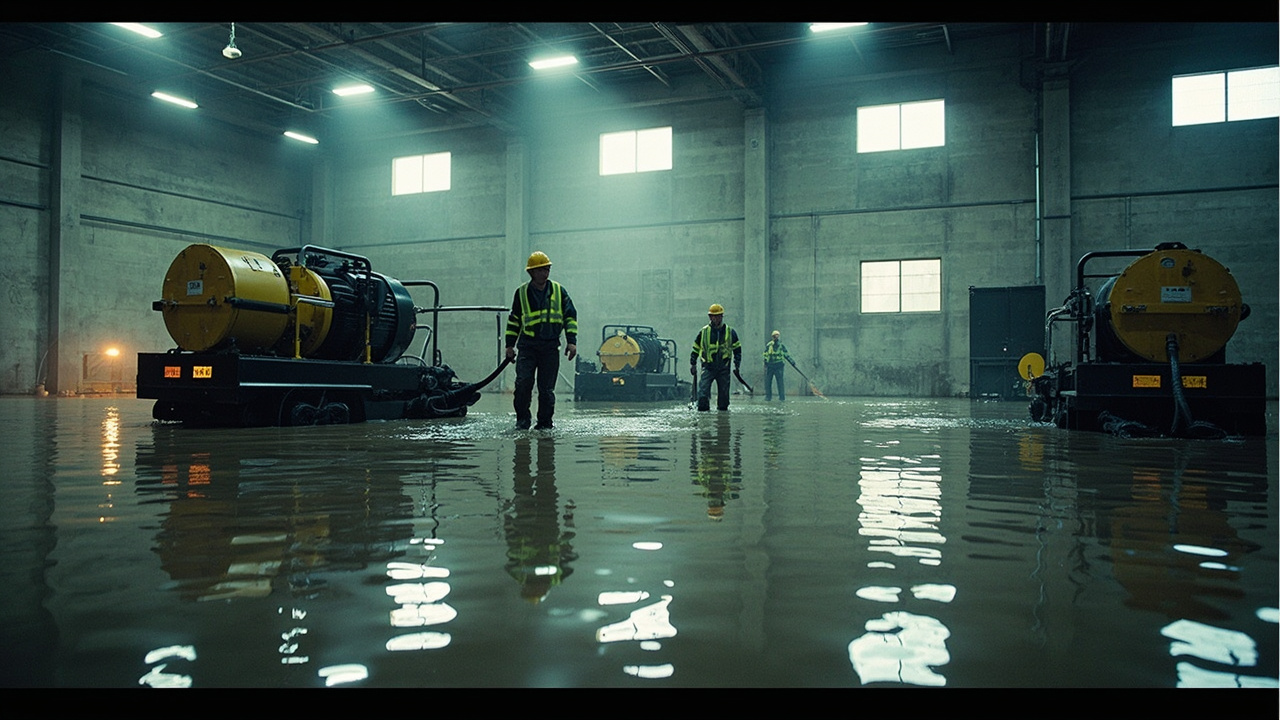
Warehouse flood restoration requires equipment capacity most contractors do not own. We deploy truck-mounted extraction units capable of removing thousands of gallons per hour, not the small portable units used in homes. Our industrial dehumidifiers process 20 to 30 times the moisture volume of residential equipment.

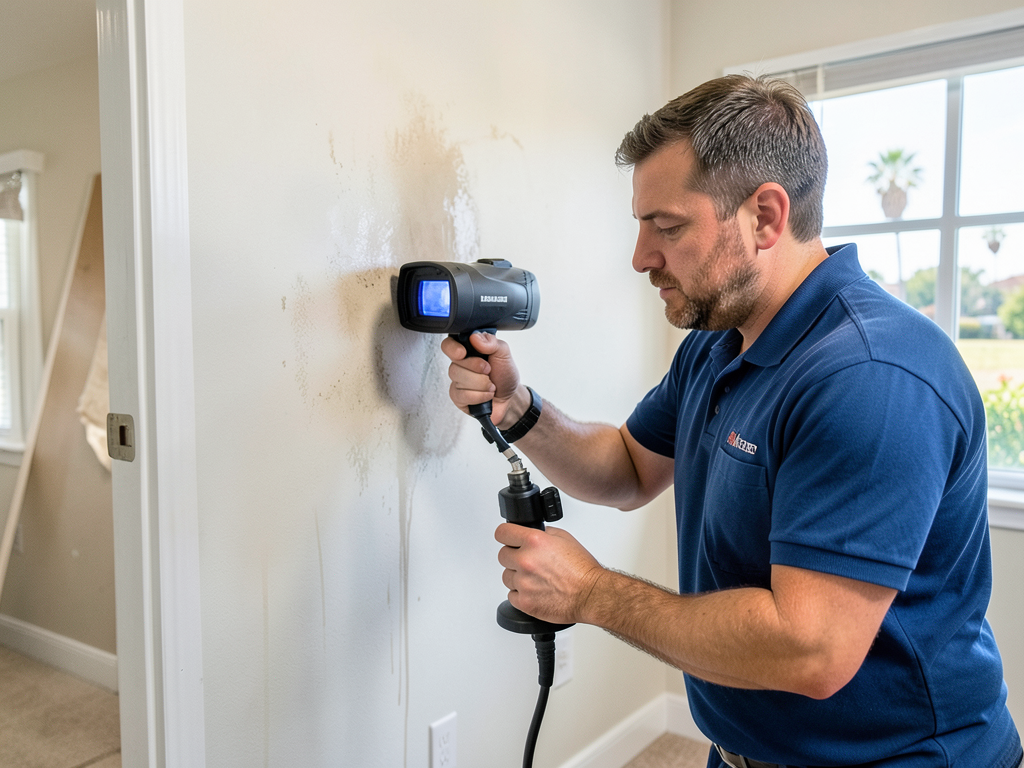
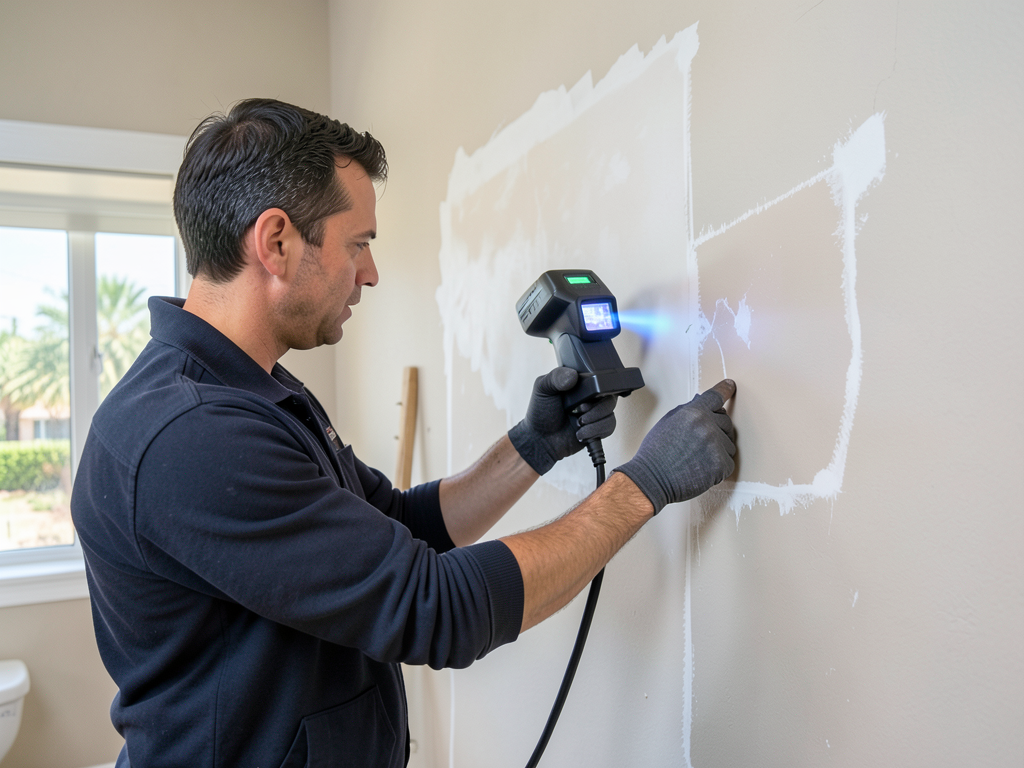
The methodology shifts entirely. We perform moisture mapping using thermal imaging to identify trapped water in concrete slabs and behind insulated panels. Warehouses with refrigerated sections require specialized protocols to prevent condensation and secondary mold growth when temperature differentials exist between zones.

We coordinate with your operations team to establish containment zones. Critical inventory gets relocated first. High-value products move to climate-controlled temporary storage if needed. We isolate damaged sections using commercial vapor barriers to allow partial facility operations while restoration continues.

Industrial water damage cleanup includes documenting every phase for your insurance adjuster and risk management team. We photograph damage progression, log moisture readings in a chain-of-custody format, and provide daily progress reports that satisfy commercial policy requirements. Most policies require specific documentation standards that residential processes do not address.

Structural drying in warehouses takes longer than homes due to building mass. A concrete slab holds 10 to 15 times more moisture per square foot than wood subflooring. We use injection drying systems that force heated air into wall cavities and under slab vapor barriers to accelerate evaporation. Our commercial air movers create controlled airflow patterns that prevent moisture from migrating into undamaged zones. This targeted approach reduces overall drying time and gets your facility back online faster than passive drying methods.

What Happens During Emergency Warehouse Restoration

Warehouse Flood Restoration in San Diego – Industrial-Grade Solutions That Minimize Downtime and Protect Inventory
01

Immediate Water Extraction

Our crew arrives with truck-mounted extraction units and portable pumps to remove standing water within the first hour. We prioritize high-traffic areas and loading zones to restore partial access quickly. Electrical systems get assessed and isolated before extraction begins to eliminate shock hazards. We document water levels and contamination category for insurance purposes while extraction proceeds.
02

Structural Drying and Monitoring

We position industrial dehumidifiers and air movers based on moisture meter readings and thermal imaging results. Moisture levels get logged every 12 hours using calibrated hygrometers. Drying equipment runs continuously until concrete slabs, drywall, and insulation reach target moisture content below 12 percent. We adjust equipment placement as readings change to optimize airflow and evaporation rates throughout the affected space.
03

Sanitization and Clearance Testing

After structural drying completes, we apply antimicrobial treatments to all affected surfaces. Category 2 or Category 3 water requires EPA-registered disinfectants applied at manufacturer-specified dwell times. We conduct final moisture verification and air quality testing before removing equipment. You receive a completion certificate with all documentation needed for insurance claims and regulatory compliance if your facility handles food products or pharmaceuticals.

Why San Diego Facility Managers Choose Keystone Water Damage Restoration

San Diego's commercial building codes require specific moisture barriers and vapor retarders in structures built after 2010. Older warehouses in Miramar and Sorrento Valley often lack these protections. We understand which facilities face grandfathered code compliance and how that impacts restoration methods and insurance coverage.

Our familiarity with San Diego County's Industrial Wastewater Control Program matters when flood water contains industrial contaminants. We coordinate with the County Department of Environmental Health when necessary and ensure all water disposal meets local discharge requirements. This prevents regulatory fines that compound your flood losses.

We maintain relationships with industrial equipment rental companies throughout San Diego County. When your facility needs temporary power distribution, emergency lighting, or climate control during restoration, we coordinate delivery within hours. These vendor relationships eliminate delays that extend downtime.

Keystone Water Damage Restoration San Diego operates 24/7 dispatch specifically for commercial clients. We do not route your emergency call to an answering service. You speak directly with a project manager who can mobilize a crew to your Otay Mesa distribution center or Kearny Mesa warehouse within 90 minutes.

Our commercial fleet includes four truck-mounted extraction units and 60 industrial dehumidifiers. We can scale immediately to multi-zone incidents without waiting for equipment rental. When a 100,000-square-foot facility floods, you need a contractor with owned capacity, not someone calling around to rent equipment while your inventory sits in water.

We provide temporary facility managers for extended restoration projects. If your warehouse requires three weeks of structural drying and reconstruction, we assign a dedicated supervisor who coordinates with your insurance adjuster, answers tenant questions, and provides daily progress documentation. You maintain one point of contact instead of managing multiple subcontractors.

What to Expect During Your Warehouse Restoration Project

Emergency Response Timeline

We arrive on-site within 90 minutes of your call for facilities in central San Diego County. Our crew performs an initial damage assessment within 30 minutes of arrival and begins water extraction immediately after electrical safety verification. You receive a preliminary scope of work and cost estimate within four hours. Most insurance carriers require mitigation to begin within 24 hours of loss discovery to prevent coverage disputes. We document our response time and initial findings to support your claim and demonstrate you took immediate action to minimize damages.

Damage Assessment Process

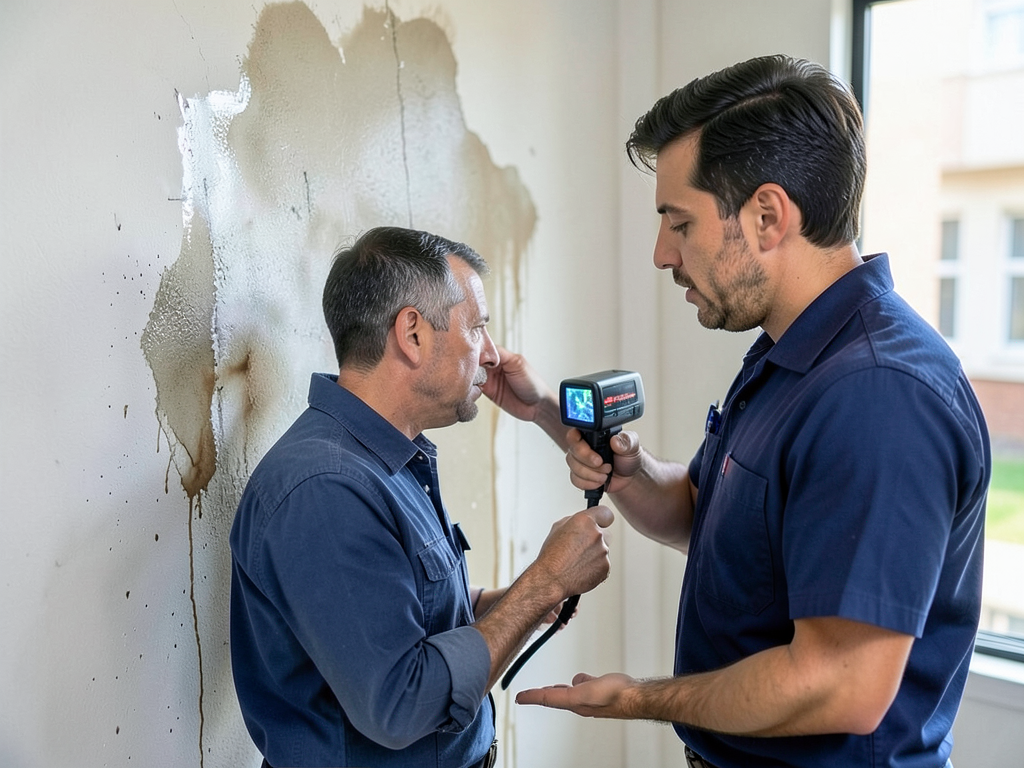
Our project manager conducts a wall-to-wall inspection using thermal imaging cameras and moisture meters. We test moisture content in concrete slabs, wall cavities, insulation, and structural framing. You receive a color-coded facility map showing affected zones and moisture severity levels. We identify contamination categories and document all damaged inventory with photographs. This assessment includes airflow analysis to determine equipment placement for optimal drying efficiency. The complete report goes to your insurance adjuster within 24 hours and provides the documentation needed to process your claim quickly.

Restoration Quality Standards

We dry structures to IICRC S500 standards, which require moisture content below 12 percent for wood materials and 3 percent for concrete slabs. Our technicians verify these levels using calibrated moisture meters before removing drying equipment. All antimicrobial treatments use EPA-registered products applied at label rates. You receive certificates of completion with final moisture readings and air quality test results. These documents satisfy insurance requirements and provide liability protection if mold issues arise later. We photograph all completed work and provide digital records for your facility maintenance files.

Post-Restoration Monitoring

We conduct a 30-day follow-up inspection to verify no secondary moisture issues developed. This visit includes moisture meter testing of previously affected areas and visual inspection for signs of mold growth or material degradation. You receive a written clearance report confirming your facility remains within acceptable moisture parameters. If issues develop within the first 90 days related to incomplete drying, we return to address them at no additional cost. For facilities with recurring moisture problems, we provide recommendations for drainage improvements, waterproofing, or HVAC modifications to prevent future incidents.

Frequently Asked Questions

You Have Questions,
We Have Answers

How much does a water restoration company charge? +

Water restoration pricing for San Diego warehouses depends on damage scope, square footage, water category, and extraction complexity. Class 1 incidents with minimal surface water cost less than Class 4 deep saturation requiring specialty drying. Commercial projects factor in equipment staging, after-hours access, and structural drying timelines. Most restoration companies charge per equipment placement day plus labor, with industrial dehumidifiers and air movers billed separately. Emergency mitigation typically runs higher than scheduled work. San Diego's coastal humidity extends drying times compared to arid regions, impacting total cost. Request itemized estimates covering extraction, drying, antimicrobial treatment, and disposal to compare accurately.

What's the difference between remediation and restoration? +

Remediation removes contamination and stops damage progression. Restoration rebuilds affected areas to pre-loss condition. In warehouse floods, remediation includes water extraction, structural drying, antimicrobial application, and contaminated material removal. This stabilizes the property and prevents mold growth. Restoration follows with reconstruction like drywall replacement, flooring reinstallation, and electrical repairs. San Diego warehouses often require both phases. A loading dock flood needs immediate remediation to protect inventory and prevent concrete degradation, then restoration to repair damaged dock seals and doors. Most commercial projects separate these phases for insurance documentation and phased occupancy planning.

How do restoration companies get paid? +

Restoration companies typically bill insurance carriers directly through assignment of benefits or submit invoices after client payment. For warehouse floods in San Diego, commercial policies often require pre-approval for large mitigation projects. Companies provide detailed scoping documents with moisture readings, equipment logs, and photo documentation to justify charges. Payment structures include direct insurance billing, where the carrier pays the contractor after deductible collection, or client payment with reimbursement filing. Many warehouse owners pay upfront for time-sensitive mitigation to avoid business interruption losses, then pursue insurance recovery. Payment timing affects project start dates and contractor selection for commercial properties.

Is water damage restoration worth it? +

Professional warehouse flood restoration prevents exponential damage costs and liability exposure. Water wicks into concrete, structural supports, and insulation within hours. San Diego's moderate climate creates ideal mold growth conditions in 24 to 48 hours without proper drying. Unmitigated water damage compromises structural integrity, violates tenant lease agreements, triggers OSHA concerns for employee safety, and creates slip hazards. Restoration costs represent a fraction of inventory loss, business interruption, and potential litigation from delayed response. For commercial properties, documented professional restoration protects insurance coverage and demonstrates due diligence. Attempting DIY drying in warehouse spaces typically fails due to inadequate equipment capacity and moisture measurement expertise.

Does insurance pay for water restoration? +

Most commercial property policies cover sudden and accidental water damage, including warehouse floods from broken pipes, HVAC failures, or roof leaks. San Diego policies typically exclude gradual damage, groundwater intrusion, and maintenance-related issues. Coverage depends on cause, not damage type. Insurance pays for both mitigation and restoration within policy limits after deductible. Warehouse owners must document losses immediately with photos, moisture readings, and affected inventory lists. Flood insurance through NFIP requires separate policies and has different claims processes. Many carriers require notification within 24 to 48 hours. Review your policy's water damage exclusions and business interruption riders before incidents occur.

Is the subfloor ruined if it gets wet? +

Concrete subfloors in San Diego warehouses withstand water exposure better than wood systems, but both require assessment. Water saturates porous concrete, creating vapor transmission issues that damage floor coatings and stored materials. Delamination, efflorescence, and microbial growth develop without proper drying. Wood subfloors typically require replacement if submerged beyond 24 hours, especially with contaminated water. Professional moisture testing determines salvageability. Concrete slab moisture content must drop below 4.5 percent before recoating. Raised wood floors with adequate airflow may dry successfully. Document subfloor moisture readings for insurance claims. Replacing contaminated subfloors costs less than ongoing moisture problems and inventory damage.

What are the 4 types of remediation? +

The four remediation categories classify water contamination levels. Category 1 involves clean water from supply lines or rain with no chemical or biological contamination. Category 2 contains significant contamination from washing machines, toilet tanks, or aquarium spills. Category 3 includes highly contaminated water from sewage backups, river flooding, or storm surge. Category 4, sometimes classified separately, involves specialty scenarios with deep penetration into porous materials. San Diego warehouse floods commonly start as Category 1 but degrade to Category 2 within 48 hours as bacteria multiply. Each category requires escalating safety protocols, disposal procedures, and antimicrobial treatments. Category classification determines restoration scope and insurance coverage.

What are the 3 R's of recovery? +

The three Rs framework guides comprehensive flood response. Rescue addresses immediate safety by securing the structure, stopping water sources, and protecting critical assets. Recovery focuses on damage mitigation through water extraction, structural drying, and temporary business continuity measures. Restoration returns the warehouse to operational condition through repairs, replacements, and system testing. San Diego warehouses often prioritize Recovery phase speed to minimize inventory loss and meet shipping commitments. This staged approach allows insurance documentation between phases and enables partial warehouse reopening during reconstruction. Commercial properties benefit from clearly defined phase transitions with measurable completion criteria and stakeholder signoffs before advancing.

What is the difference between flood remediation and repair? +

Flood remediation stabilizes and contains damage. Flood repair reconstructs damaged components. In San Diego warehouses, remediation extracts standing water, dries structural elements, removes contaminated materials, and applies antimicrobial treatments. This phase prevents secondary damage and mold colonization. Repair follows with replacing drywall, repainting, reinstalling flooring, and fixing damaged electrical or plumbing systems. Remediation requires specialized drying equipment and moisture monitoring. Repair uses standard construction methods. Insurance claims often separate these phases with different coverage limits. Warehouse owners sometimes hire different contractors for each phase. Remediation speed directly impacts total repair costs by limiting damage spread and business downtime.

What is the 2 year rule for contractors? +

California Business and Professions Code Section 7159 requires contractors to complete projects within the timeframe stated in contracts or within a reasonable period. For warehouse restoration in San Diego, this affects project scheduling and contractor selection. The statute also mandates specific contract elements for projects exceeding 500 dollars, including payment schedules, change order procedures, and completion dates. Commercial property owners should verify contractors maintain active licenses, proper insurance, and workers compensation coverage. Contracts should specify liquidated damages for delays impacting business operations. San Diego warehouse owners benefit from contracts with clear milestone dates and holdback provisions. This protects against prolonged disruption during multi-phase restoration projects.

How San Diego's Coastal Climate Impacts Warehouse Drying Timelines

San Diego's marine layer creates persistent high humidity conditions from May through August that extend structural drying times by 30 to 40 percent compared to inland regions. Warehouses in Chula Vista and National City face morning humidity levels above 75 percent, which slows evaporation even with commercial dehumidifiers running. We compensate by increasing equipment density and using desiccant dehumidifiers that work effectively in high-humidity environments. Facilities without climate control require longer drying periods, and we adjust project timelines to account for seasonal moisture conditions specific to coastal San Diego locations.

San Diego County requires commercial contractors performing restoration work exceeding $500 in value to hold active business licenses and maintain proper liability coverage. We hold all required permits and maintain commercial general liability coverage appropriate for large-loss industrial projects. Our familiarity with local building inspectors and plan review processes accelerates permit approval when structural repairs require formal inspections. For warehouses storing food products or operating under FDA oversight, we understand San Diego County Environmental Health requirements and coordinate inspections to minimize operational delays during your restoration project.
Water Damage Restoration Services in The San Diego Area

We are proud to serve the entire San Diego area and invite you to view our service region on the map below. While our emergency response team is mobile and always ready to dispatch to your location rapidly, our central operations base allows us to coordinate efficient service across all of San Diego County. Contact us today for immediate assistance, no matter where your property is located within our service area.

Address:
Keystone Water Damage Restoration San Diego, 4445 Eastgate Dr, San Diego, CA, 92121

Additional Services We Offer

Our news updates

Latest Articles & News from The Blogs

Who Pays for Water Damage When a Neighbor’s Leak Affects Your San Diego Condo Discovering water damage in your condo…

Navigating Liability When a Neighbors Apartment Leaks into Your San Diego Condo

Who Pays for Water Damage When a Neighbor’s Leak Affects Your San Diego Condo Discovering water damage in your condo…

The Critical Steps Your Restoration Team Takes in the First Forty Eight Hours

The Critical Steps Your Restoration Team Takes in the First Forty Eight Hours When water invades your home in San…

Should You Try In Place Drying or Choose a Full Rip Out After a San Diego Flood

Should You Try In Place Drying or Choose a Full Rip Out After a San Diego Flood San Diego homeowners…

Contact Us

Every hour your facility stays offline costs money. Call (858) 203-2555 now for immediate dispatch. Our commercial crews are standing by 24/7 with the equipment and capacity to handle large-scale industrial flood recovery throughout San Diego County.