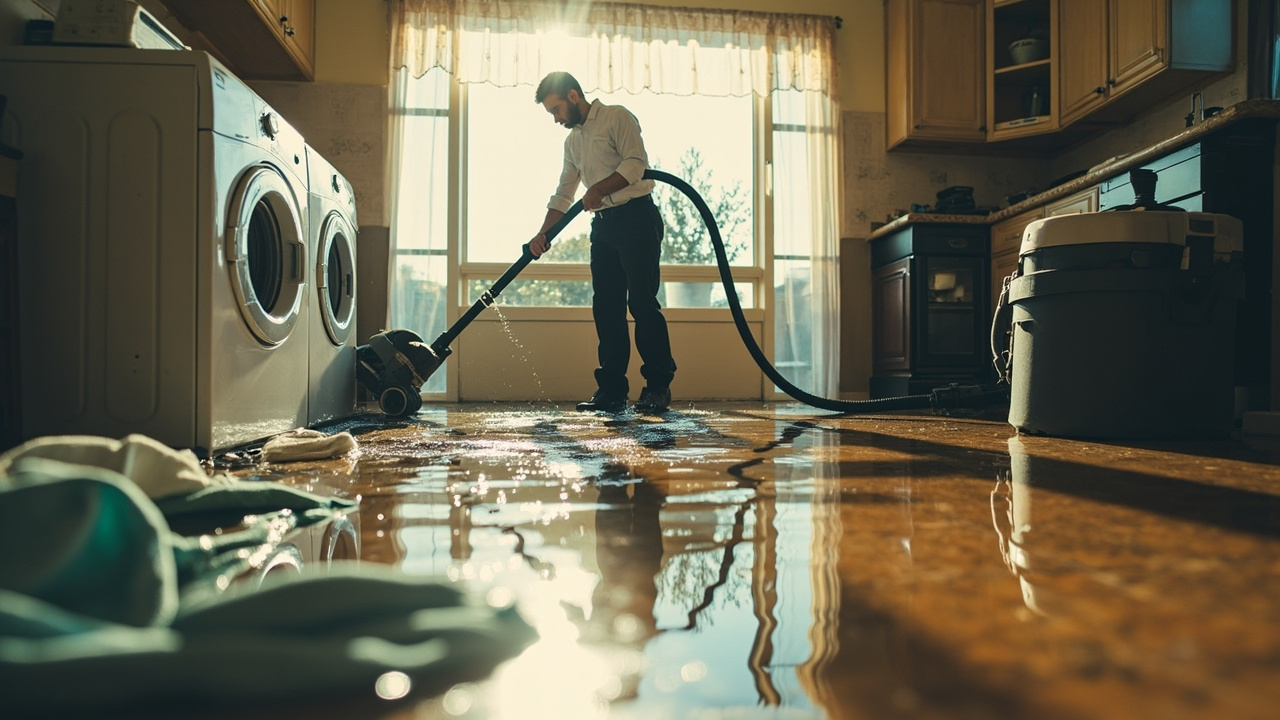
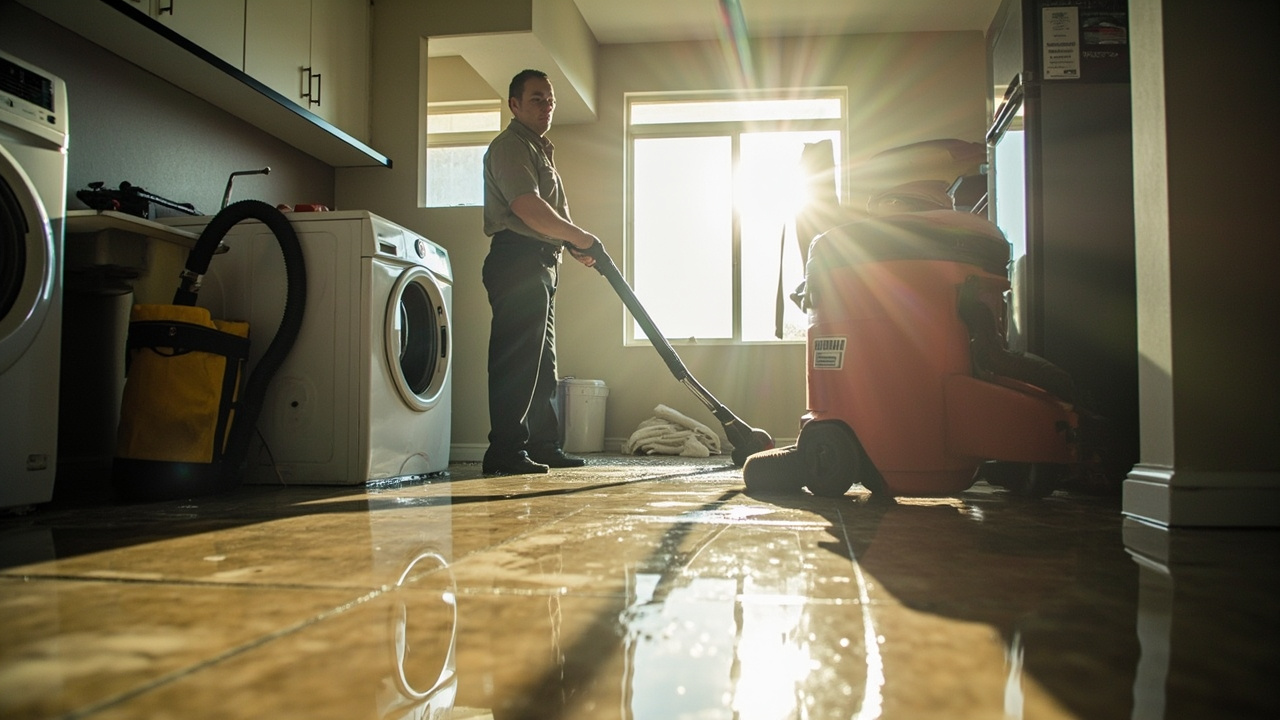
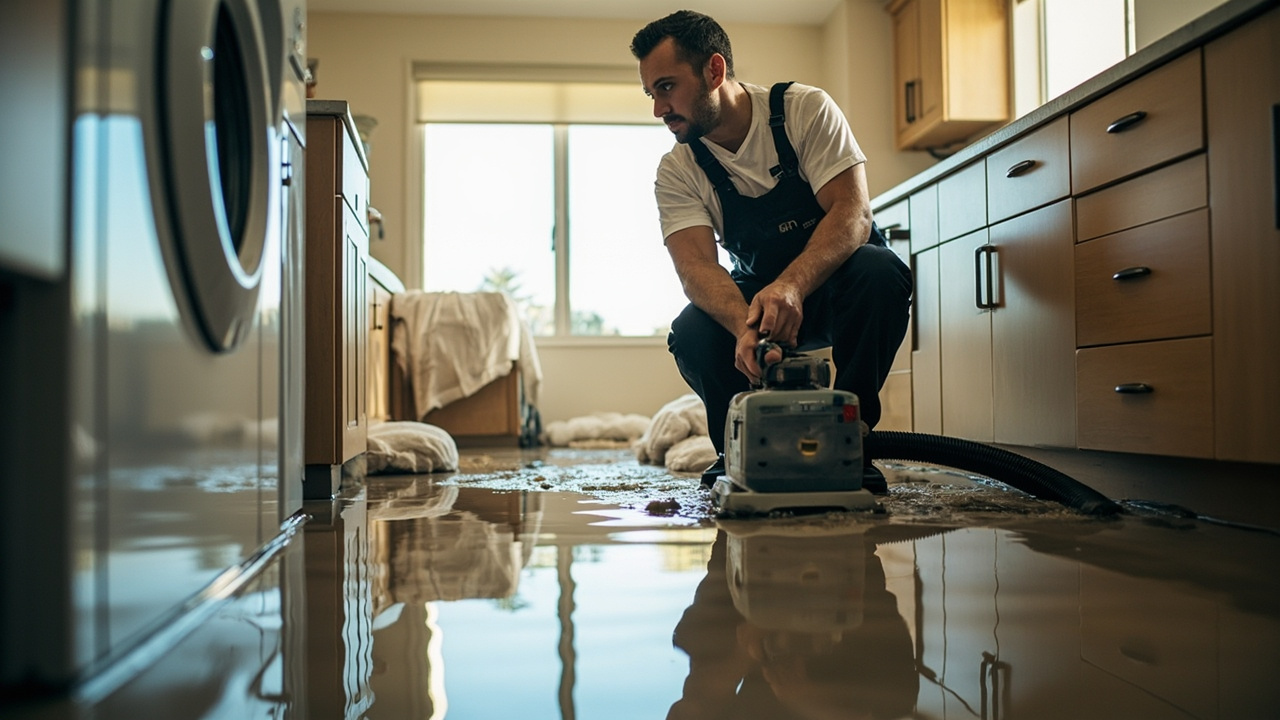
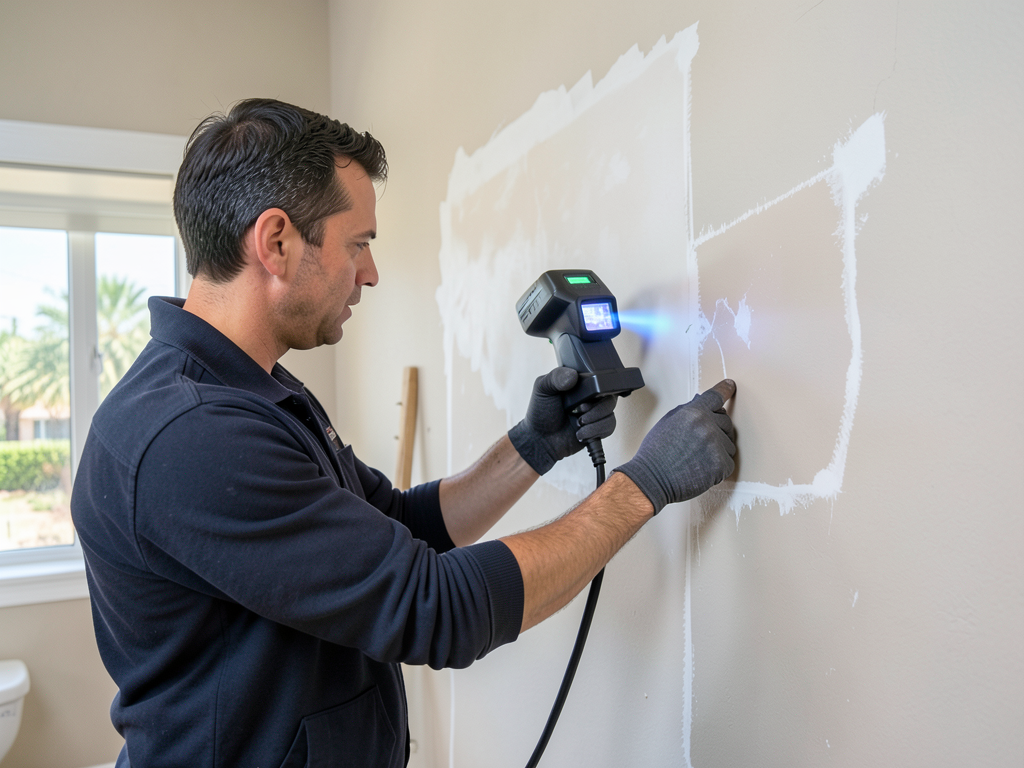
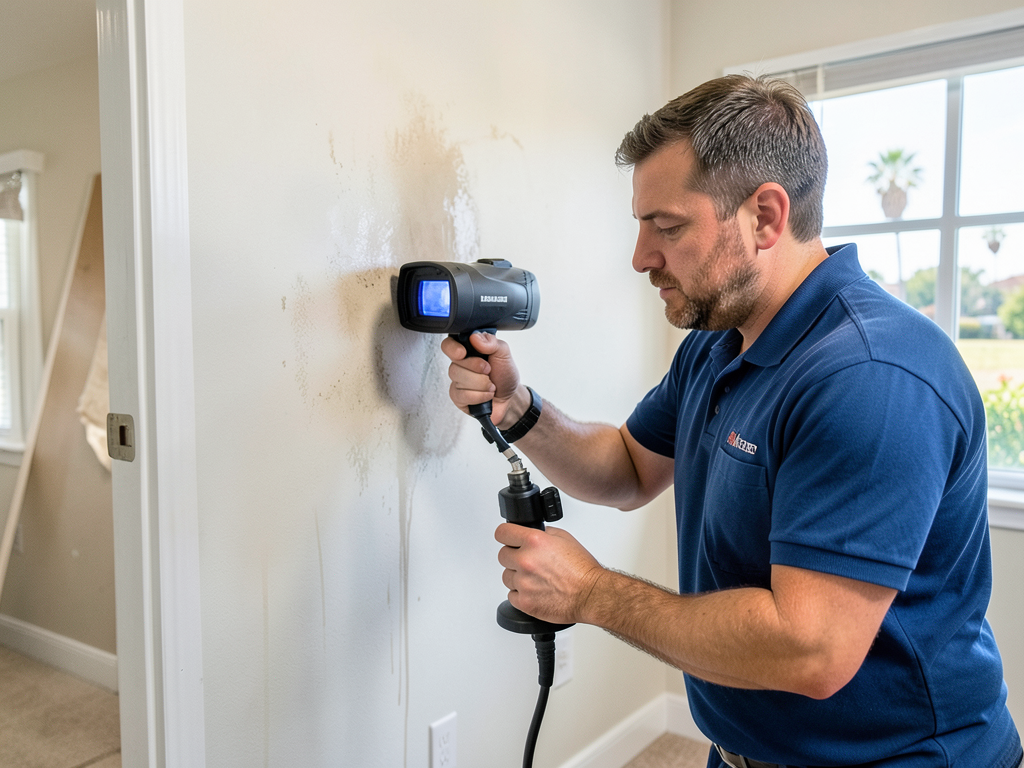
We do not just extract surface water and walk away. Washing machine flood cleanup services require a systematic approach that addresses both visible and hidden moisture.
First, we isolate the affected zone to prevent cross-contamination. If your washer flooded with greywater from a drain backup, we treat it as Category 2 water, which carries contaminants. We remove soaked materials like baseboards and trim to expose wall cavities for inspection.
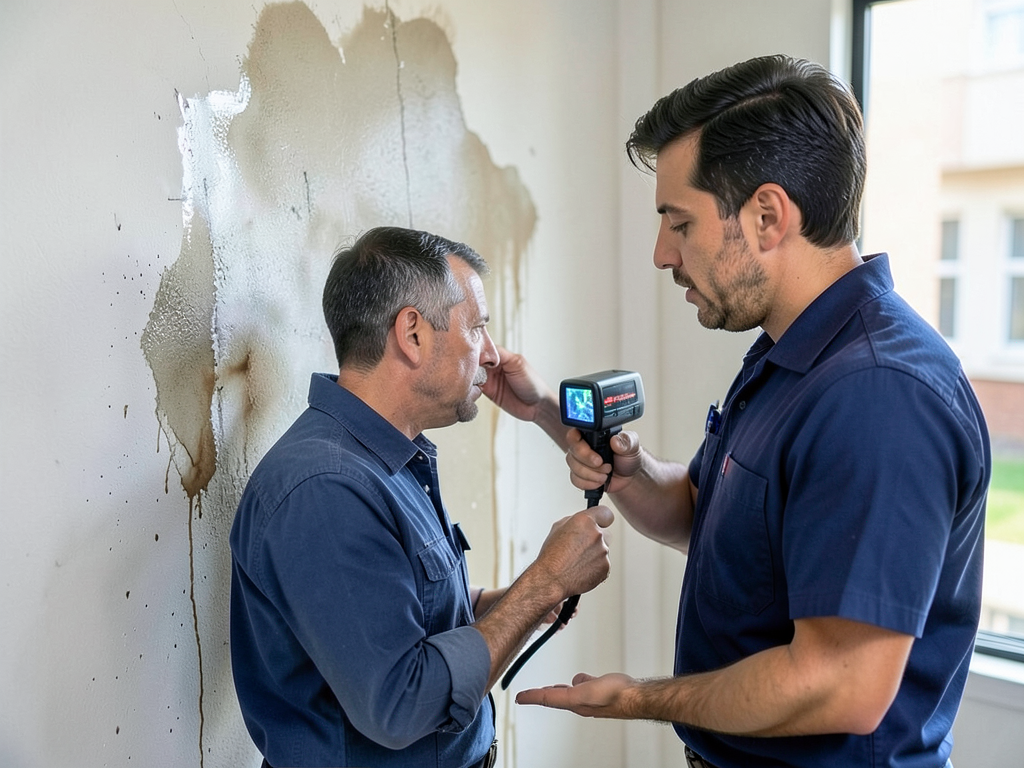
Next, we use thermal imaging cameras to map moisture migration. Water follows gravity and pressure gradients, so we trace saturation into subfloors, behind drywall, and along stud bays. Moisture meters confirm readings down to 0.1 percent accuracy.
High-velocity air movers and commercial dehumidifiers create a controlled drying environment. We position equipment to maximize airflow across wet surfaces, pulling moisture out of porous materials like drywall and wood framing. Dehumidifiers drop ambient humidity below 40 percent to accelerate evaporation.
We monitor drying progress every 24 hours using moisture readings logged at multiple points. Structural materials must reach equilibrium moisture content before we sign off. For wood framing, that means 12 to 15 percent moisture content. For drywall, it means under 1 percent.
If your washer overflow saturated insulation or carpet padding, we remove and dispose of it. These materials do not dry effectively and become mold reservoirs.
Our goal is to return your laundry room and adjacent areas to pre-loss condition without leaving hidden moisture that causes problems later. That requires equipment, training, and accountability most restoration companies skip.