menu

Hidden Moisture Detection in San Diego – Expert Diagnosis Before Mold Takes Hold

Keystone Water Damage Restoration San Diego uses thermal imaging, moisture meters, and hygrometers to find trapped water behind walls, under floors, and in crawl spaces before structural damage spreads.

Slider Image 1
Slider Image 2
Slider Image 3
Slider Image 4
Slider Image 5
Slider Image 7
Slider Image 8
Slider Image 9
Slider Image 10
Slider Image 11

Why Hidden Water Is the Biggest Threat to San Diego Homes

You see no puddles. No dripping. No obvious leak. But you smell something musty in the hallway. Or the drywall feels spongy near the bathroom. Or your water bill jumped for no clear reason.

This is hidden moisture. It hides in wall cavities, under tile, inside ceilings, and beneath slab foundations. You cannot see it, but it is destroying your home.

San Diego's mild coastal climate creates the perfect storm for concealed dampness. Morning fog rolls in from the Pacific. Overnight condensation forms inside poorly ventilated attics. Older homes in neighborhoods like North Park and Normal Heights have galvanized pipes that corrode slowly behind plaster walls. You do not see the leak until the drywall caves in.

Detecting invisible leaks early stops thousands of dollars in structural rot, mold remediation, and insurance headaches. The problem is that most homeowners wait too long. They assume the smell will go away. They think the stain is old. By the time they call, the subfloor is soaked and the studs are soft.

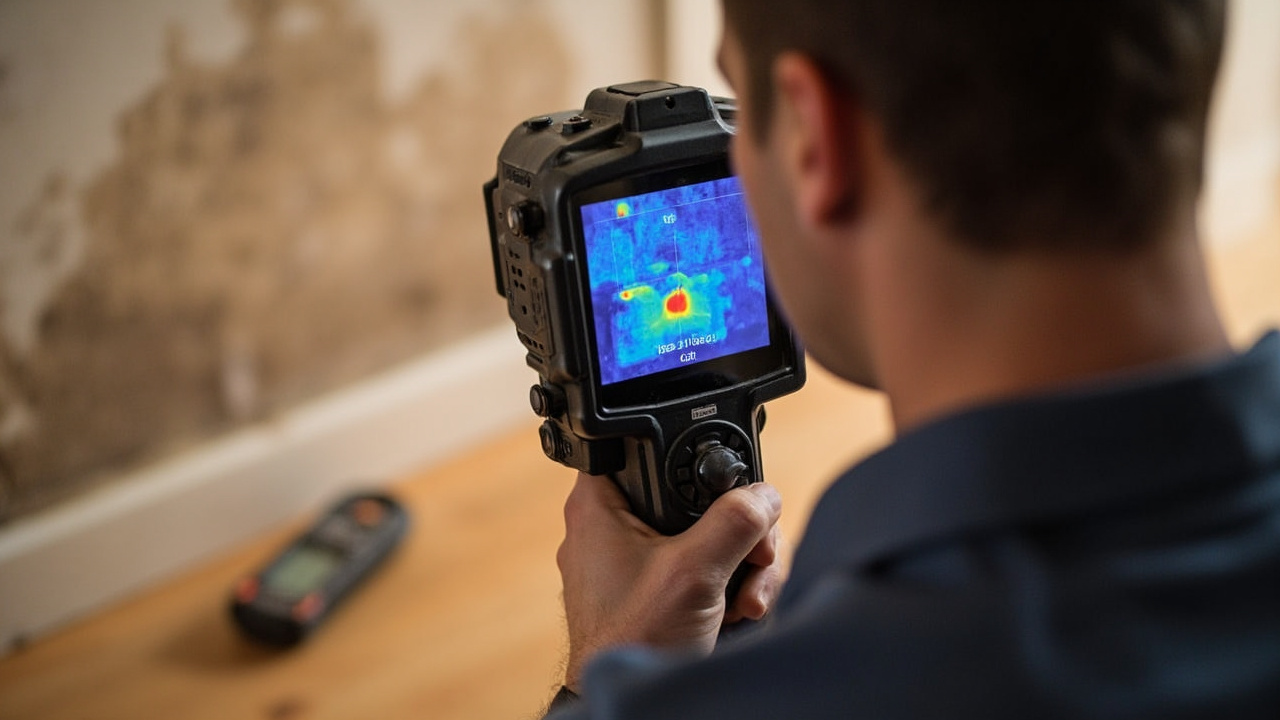
Spotting hidden water damage requires more than a flashlight and a guess. It requires tools that see through surfaces. Thermal cameras detect temperature differences caused by evaporating water. Moisture meters measure saturation levels in wood, drywall, and concrete. Hygrometers track humidity spikes that signal trapped moisture.

If you suspect a problem but see no proof, you need someone who can find what is hiding. Because the longer water sits unseen, the worse the damage becomes.

Why Hidden Water Is the Biggest Threat to San Diego Homes
How We Locate Water You Cannot See

How We Locate Water You Cannot See

We do not guess. We measure. Every hidden moisture inspection starts with a systematic scan of the affected area using calibrated tools designed to identify unseen water intrusion.

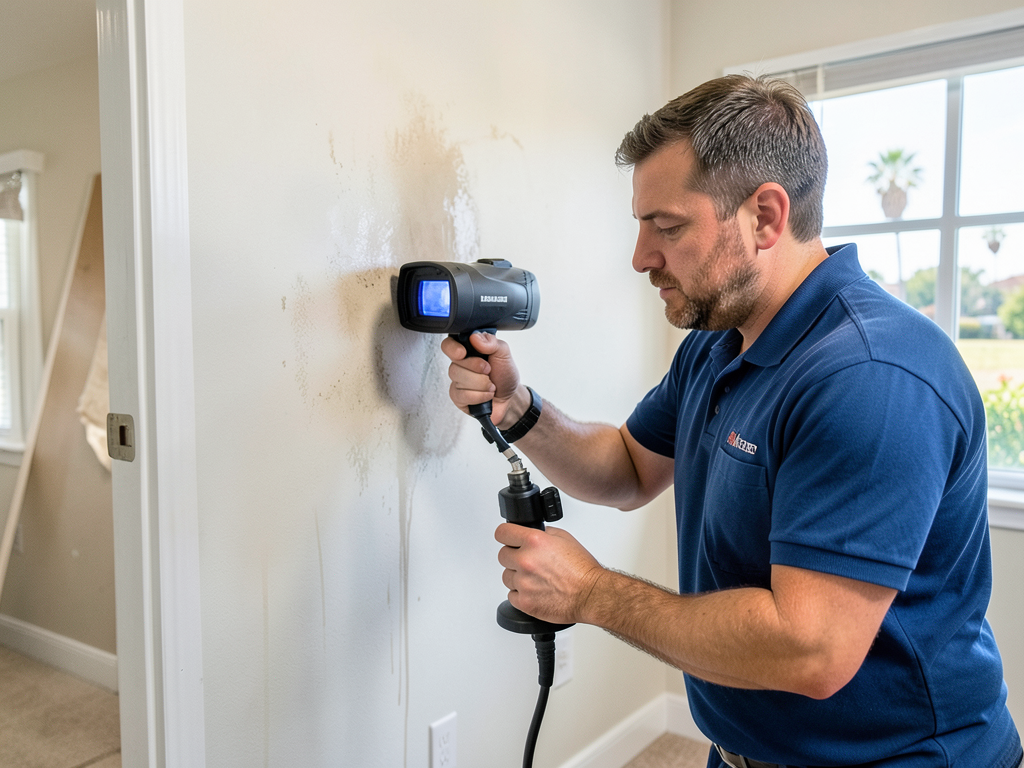
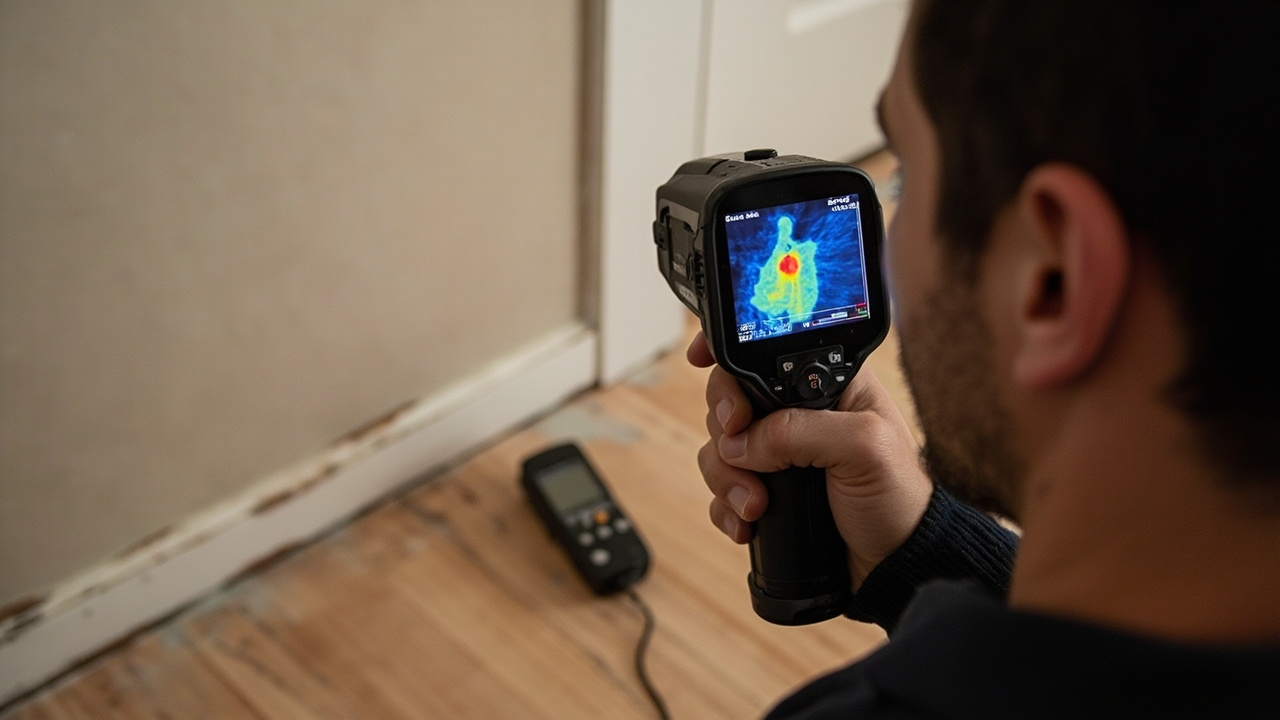
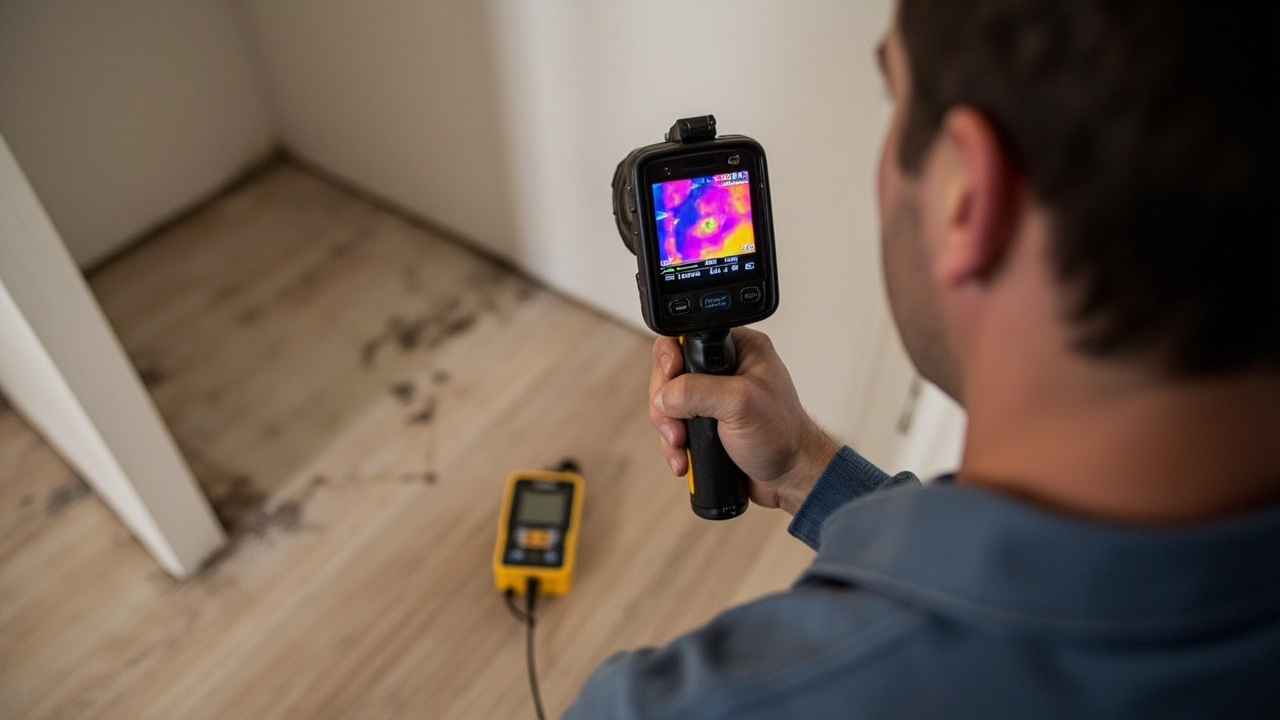
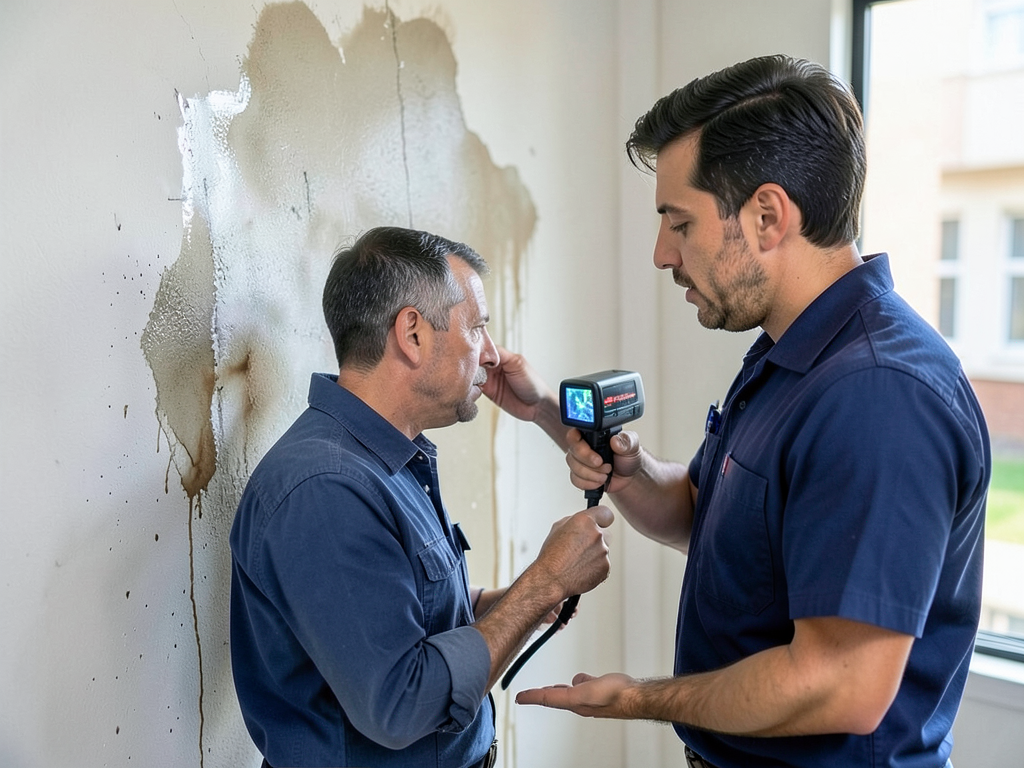
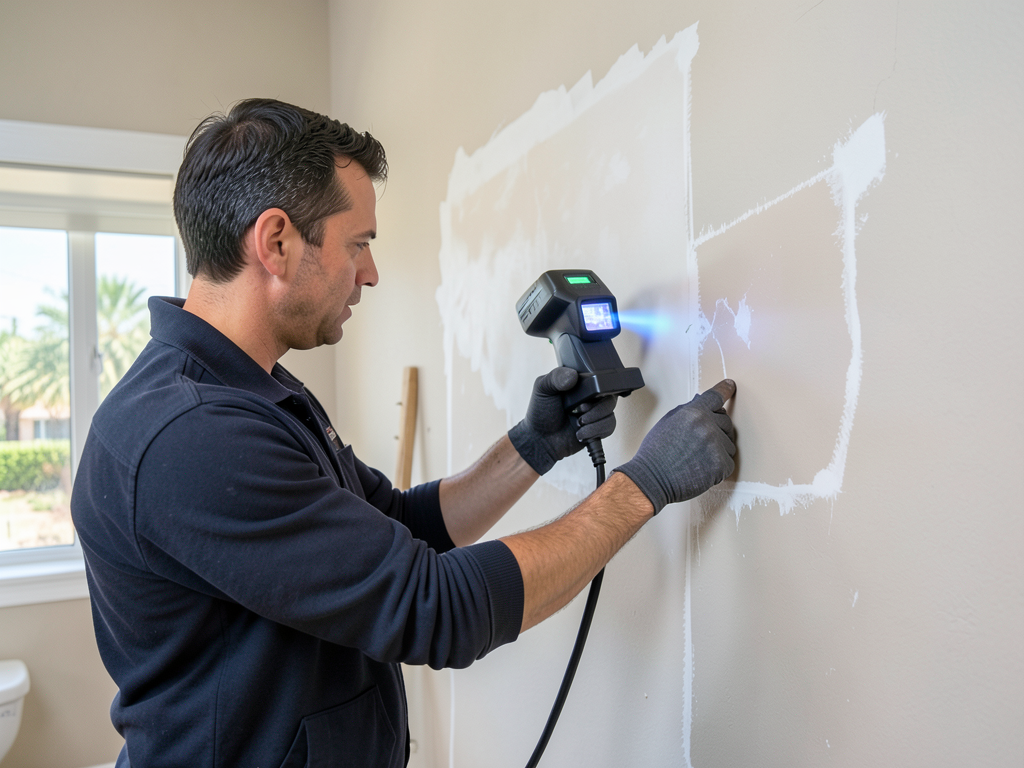
First, we use infrared thermal imaging cameras. Water cools surfaces as it evaporates. The camera detects temperature variations invisible to the naked eye. A cold spot on a ceiling often means a slow roof leak. A cool patch behind a wall signals a pinhole pipe leak. We scan floors, walls, ceilings, and exterior stucco to map out the moisture signature.

Next, we deploy pin-type and pinless moisture meters. Pin meters penetrate drywall and wood to measure saturation percentages. Pinless meters scan larger surface areas without leaving holes. We test baseboards, subfloors, framing, and insulation. Any reading above 16 percent in wood means active moisture intrusion.

We also use hygrometers to measure relative humidity in enclosed spaces like crawl spaces and attics. High humidity often indicates a vapor intrusion problem or poor ventilation that traps moisture over time.

Once we map the moisture, we trace it back to the source. Is it a leaking supply line? A failed wax ring under the toilet? Condensation from an uninsulated cold water pipe? A cracked slab foundation allowing groundwater seepage?

Finding trapped water is only half the job. Understanding the source is what prevents it from coming back. We document everything with photos, moisture readings, and thermal images so you understand exactly what is happening inside your walls.

What Happens During a Moisture Detection Inspection

Hidden Moisture Detection in San Diego – Expert Diagnosis Before Mold Takes Hold
01

Initial Assessment and Scanning

We start by interviewing you about symptoms. When did the smell start? Has the water bill changed? Any recent plumbing work? Then we perform a visual inspection of walls, ceilings, floors, and fixtures. We check for staining, warping, or soft spots. Next, we begin thermal scanning and moisture meter readings in suspected areas and adjacent rooms to map the full extent of hidden water.
02

Source Identification and Testing

Once we locate high moisture readings, we trace the problem back to its origin. We inspect supply lines, drain pipes, roof penetrations, windows, and foundation perimeters. We may perform a water pressure test to detect slow leaks in pressurized lines. We check attic ventilation and crawl space vapor barriers. The goal is to confirm the exact cause, not just treat the symptom.
03

Documentation and Action Plan

We provide a written report with thermal images, moisture readings, photos, and a clear diagnosis. You receive a scope of work that outlines the source repair, drying protocol, and any necessary mold remediation or structural repairs. If insurance is involved, we provide documentation formatted for claims adjusters. You leave the inspection knowing exactly what is wrong and what it takes to fix it.

Why San Diego Property Owners Trust Keystone for Moisture Detection

San Diego is not Phoenix. It is not Seattle. The moisture problems here are unique, and fixing them requires local knowledge.

Coastal humidity accelerates corrosion in older galvanized plumbing common in homes built before 1960. Properties in areas like La Jolla, Point Loma, and Ocean Beach face salt air that degrades metal flashings and roof penetrations faster than inland neighborhoods. Stucco homes, which dominate San Diego architecture, trap moisture behind exterior cladding if weep screeds are blocked or improperly installed.

We understand these patterns because we work in them every day. We know that Mission Valley homes near the San Diego River floodplain often have elevated groundwater that seeps through slab foundations. We know that older homes in Hillcrest and Bankers Hill have cast iron drain stacks that crack and leak inside walls. We know that new construction in Carmel Valley sometimes suffers from inadequate attic ventilation, leading to condensation problems during cooler months.

This is not textbook knowledge. It is field experience. We have scanned thousands of San Diego homes. We know what to look for before we even arrive.

We also understand local building codes and how they affect moisture mitigation. San Diego County requires specific vapor barrier installations in crawl spaces. The city has strict guidelines for stucco remediation and flashing details. When we find a problem, we do not just dry it out. We make sure the repair meets code so it does not fail again.

You are not hiring a franchise technician reading from a script. You are hiring a team that knows your neighborhood, your building type, and your climate.

What You Get with Our Moisture Detection Service

Fast Response and Flexible Scheduling

We schedule inspections within 24 to 48 hours of your call. Most appointments take 60 to 90 minutes depending on the size of your property and the complexity of the suspected leak. If you have an active water emergency, we can deploy same-day to assess damage and begin mitigation. We work around your schedule, including evenings and weekends, so you do not have to take time off work to meet us.

Comprehensive Diagnostic Evaluation

Every inspection includes thermal imaging, moisture meter testing, and humidity analysis. We do not limit our scan to one room. We check adjacent spaces, floors above and below, and potential pathways for water migration. You receive a full written report with annotated thermal images, moisture content percentages, and photos of affected areas. If we find nothing, we tell you. We do not manufacture problems to justify a service call.

Accurate Diagnosis and Clear Solutions

You leave the inspection with a clear understanding of the problem, the cause, and the fix. We explain everything in plain language. No jargon. No upselling. If the issue is minor and you can handle it yourself, we tell you. If it requires professional repair, we provide a detailed scope and timeline. Our goal is to give you the information you need to make the right decision for your property.

Insurance Documentation and Follow-Up Support

If you plan to file an insurance claim, we provide documentation formatted for adjusters. This includes moisture maps, photos, thermal images, and a detailed narrative of findings. We can coordinate directly with your insurance company if needed. After repairs are complete, we offer optional follow-up moisture testing to confirm the area is fully dry and the source is resolved. This gives you peace of mind and protects your investment.

Frequently Asked Questions

You Have Questions,
We Have Answers

Why does my phone say moisture detected when there is no moisture? +

Your phone's moisture sensor can trigger false positives from residue, lint, or corrosion in the charging port. Even dried salt air from San Diego's coastal environment can leave deposits that confuse the sensor. Clean the port gently with a dry toothbrush or compressed air. If the alert persists after cleaning and drying, the sensor may be damaged. Avoid using the charger until you resolve the issue, as forcing a charge with genuine moisture present can short-circuit internal components. If you suspect hidden water damage in your home triggering humidity issues, professional moisture detection identifies sources before they cause structural problems.

Do moisture detectors really work? +

Professional moisture detectors work when used correctly. Thermal imaging cameras, pin-type meters, and non-invasive scanners detect water in walls, ceilings, and subfloors that you cannot see. Cheap consumer models often give inaccurate readings. Trained technicians know how to interpret results based on material type, San Diego's humidity levels, and building construction. They measure moisture content percentages and map affected areas. This technology prevents guessing and unnecessary demolition. For reliable results, hire certified water damage professionals who calibrate equipment regularly and understand how coastal moisture behaves differently than inland readings in San Diego's varied microclimates.

How do I find out where my moisture is coming from? +

Start by inspecting visible areas during or after water use. Check under sinks, around toilets, near water heaters, and along exterior walls after rain. Look for stains, warping, peeling paint, or musty odors. San Diego's older homes often have hidden leaks in post-tension slab foundations or behind stucco. Professional moisture mapping uses thermal imaging and meters to trace water paths through building materials. Technicians follow moisture trails to the source, whether it's a roof leak, plumbing failure, or condensation issue. Do not rely on guesswork. Accurate source identification prevents repeat damage and wasted money on fixing symptoms instead of causes.

Is there a tool to detect moisture in walls? +

Yes. Pin-type moisture meters penetrate drywall to measure moisture content. Non-invasive meters scan surfaces without making holes. Thermal imaging cameras show temperature differences that indicate wet areas behind walls. Professionals use all three tools together for accurate detection. Pin meters give precise readings at specific points. Infrared cameras map entire walls quickly. This combination finds hidden water damage in San Diego homes, especially behind shower walls, under windows, and in exterior walls where stucco traps moisture. Do not rely on smartphone apps or cheap detectors. Professional-grade equipment and trained interpretation deliver reliable results that prevent mold growth and structural decay.

How do I bypass the moisture detection? +

Do not bypass moisture detection warnings. The alert protects your device from short-circuiting and permanent damage. Charging wet electronics can destroy internal components and create fire hazards. Instead, power off the device, remove any case, and let it air dry completely for 24 hours in a low-humidity environment. San Diego's coastal fog can extend drying times. Use silica gel packets if available. Clean the charging port gently. If the warning persists after thorough drying, the port may need professional repair. For home moisture issues, address the source rather than ignoring warning signs. Hidden water causes expensive structural damage and mold.

Will the moisture detection go away on its own? +

Phone moisture alerts will clear once the port dries completely and any residue is removed. This can take 24 to 48 hours in San Diego's humid coastal areas. Do not use rice, which leaves debris. Allow natural air drying in a warm, dry location. For structural moisture in your home, the problem will not resolve on its own. Water damage worsens over time. Drywall weakens, wood rots, and mold colonizes within 48 hours. San Diego's mild climate can mask slow leaks that cause hidden damage for months. Professional moisture detection and remediation stop progression before you face major repairs. Address water intrusion immediately to protect your property value.

How San Diego's Marine Layer and Stucco Construction Create Hidden Moisture Traps

San Diego's coastal fog and morning marine layer create persistent low-level humidity that penetrates stucco exteriors. When stucco is improperly flashed around windows or lacks functional weep screeds at the foundation line, moisture accumulates in wall cavities. Older homes in neighborhoods like Kensington and South Park often have paper-backed stucco over wood framing. If the building paper tears or degrades, water migrates directly into studs and insulation. Detecting invisible leaks in these homes requires scanning behind exterior walls, not just interior surfaces. Locating concealed dampness early prevents rot, mold, and expensive re-stucco projects.

San Diego's building codes require specific moisture barriers and flashing details to address the marine climate. Keystone Water Damage Restoration San Diego understands these requirements because we work with local contractors, plumbers, and building inspectors every day. We know how homes are built here. We know where they fail. And we know how to find problems before they escalate. When you choose a local team for identifying unseen water intrusion, you are choosing experience that cannot be replicated by a national chain.
Water Damage Restoration Services in The San Diego Area

We are proud to serve the entire San Diego area and invite you to view our service region on the map below. While our emergency response team is mobile and always ready to dispatch to your location rapidly, our central operations base allows us to coordinate efficient service across all of San Diego County. Contact us today for immediate assistance, no matter where your property is located within our service area.

Address:
Keystone Water Damage Restoration San Diego, 4445 Eastgate Dr, San Diego, CA, 92121

Additional Services We Offer

Our news updates

Latest Articles & News from The Blogs

Keeping Your Pets Safe from Bacteria and Mold After a Hillcrest Flood Flooding in Hillcrest creates immediate dangers for pets…

Keeping Your Pets Safe from Bacteria and Mold After a Hillcrest Flood

Keeping Your Pets Safe from Bacteria and Mold After a Hillcrest Flood Flooding in Hillcrest creates immediate dangers for pets…

Why Your Escondido Roof is Leaking After a New Solar Panel Installation

Why Your Escondido Roof is Leaking After a New Solar Panel Installation If you notice water dripping from your ceiling…

How Your Backyard Slope is Pushing Water into Your Mira Mesa Foundation

How Your Backyard Slope is Pushing Water into Your Mira Mesa Foundation Standing water in your backyard after a San…

Contact Us

Do not wait for visible damage. Call Keystone Water Damage Restoration San Diego at (858) 203-2555 to schedule a moisture detection inspection. We find what is hiding so you can fix it before it costs thousands.